Begin of page section:
Page sections:

  • Go to contents (Accesskey 1)
  • Go to position marker (Accesskey 2)
  • Go to main navigation (Accesskey 3)
  • Go to sub navigation (Accesskey 4)
  • Go to additional information (Accesskey 5)
  • Go to page settings (user/language) (Accesskey 8)
  • Go to search (Accesskey 9)

End of this page section. Go to overview of page sections

Begin of page section:
Page settings:

English en
Deutsch de
Search
Login

End of this page section. Go to overview of page sections

Begin of page section:
Search:

Search for details about Uni Graz
Close

End of this page section. Go to overview of page sections


Search

Begin of page section:
Main navigation:

Page navigation:

  • University

    University
    • About the University
    • Organisation
    • Faculties
    • Library
    • Working at University of Graz
    • Campus
    Developing solutions for the world of tomorrow - that is our mission. Our students and our researchers take on the great challenges of society and carry the knowledge out.
  • Research Profile

    Research Profile
    • Our Expertise
    • Research Questions
    • Research Portal
    • Promoting Research
    • Research Transfer
    • Ethics in Research
    • Commission for Scientific Integrity
    Scientific excellence and the courage to break new ground. Research at the University of Graz creates the foundations for making the future worth living.
  • Studies

    Studies
    • Prospective Students
    • Students
  • Community

    Community
    • International
    • Location
    • Research and Business
    • Alumni
    The University of Graz is a hub for international research and brings together scientists and business experts. Moreover, it fosters the exchange and cooperation in study and teaching.
  • Spotlight
Topics
  • Sustainable University
  • Researchers answer
  • Work for us
Close menu

End of this page section. Go to overview of page sections

Begin of page section:
You are here:

University of Graz DigiLab News How Game Elements Can Support Children with Dyscalculia
  • Research areas
  • Master thesis topics
  • Multimodal Lab
  • Games
  • Contact | Team
  • Department of Psychology
  • News

End of this page section. Go to overview of page sections

Tuesday, 14 October 2025

How Game Elements Can Support Children with Dyscalculia

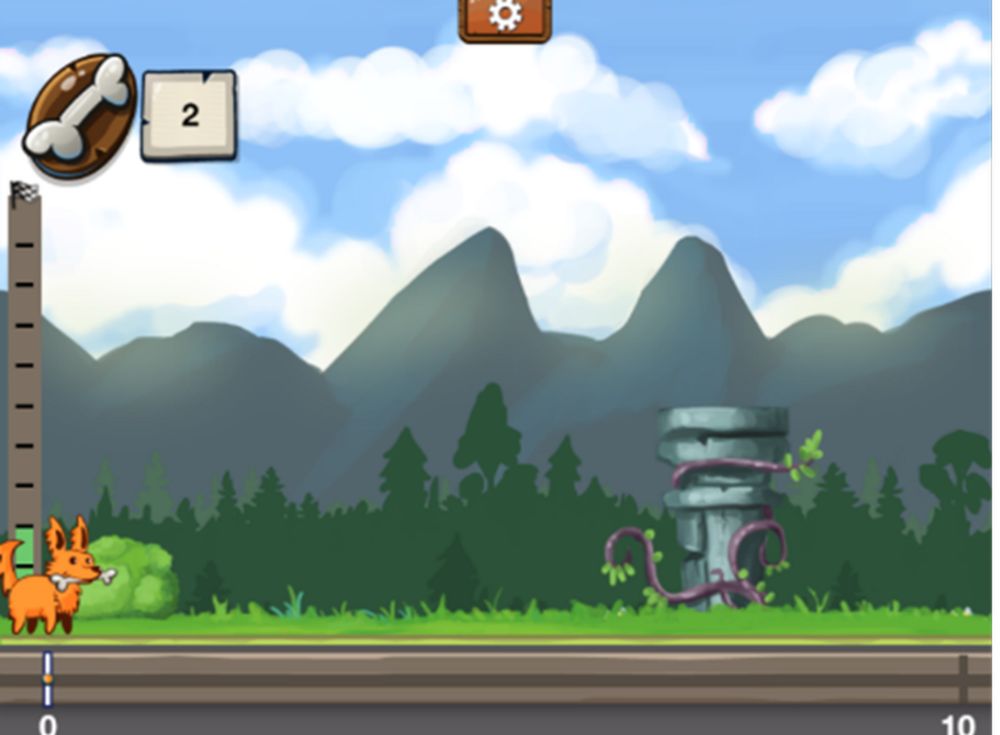
Number Trace ©Manuel Ninaus

We are excited to share our latest study, recently published in Mind, Brain, and Education. In this research, we explored how game elements influence mathematical tasks for children with dyscalculia, dyslexia, or both.


What’s it about?

Children with dyscalculia face challenges not only with basic mathematical skills but also with non-cognitive factors like low self-efficacy and high math anxiety. These issues can significantly impact their math performance and lead to avoiding math altogether. Game elements might offer a solution here.

What did we find?

In our study, 60 children completed a math task in three different formats:
 

(i) A digital version with game elements; (ii) A digital version without game elements; (iii) A traditional paper-and-pencil version

The results showed that game elements did not negatively impact performance, meaning there was no cognitive overload.

Most importantly: The children believed they performed best in the game version (i.e., higher mastery experience) and strongly preferred this version. In other words, they felt most confident when game elements were present.

Why does this matter?

Our findings suggest that game elements can help reduce negative feelings toward mathematics. They may foster self-efficacy and enhance motivation—two critical factors for long-term success in math.

What does this mean in practice?

This study highlights the potential of playful approaches to support children with learning difficulties. By focusing on creating positive experiences, we may help these children develop a more constructive relationship with mathematics.

Here the link to the full study: https://onlinelibrary.wiley.com/doi/10.1111/mbe.70016
Related news

Moritz Edlinger at the 3 Minute Thesis Competition

Digital Psychology Lab at the 16th Annual Conference of ÖGP in Salzburg

Digital Psychology Lab at GamiFIN 2026 in Lapland

DigiLab Welcomes Guest Researcher from the University of Szeged

Begin of page section:
Additional information:

University of Graz
Universitaetsplatz 3
8010 Graz
Austria
  • Contact
  • Web Editors
  • Moodle
  • UNIGRAZonline
  • Imprint
  • Data Protection Declaration
  • Accessibility Declaration
Weatherstation
Uni Graz

End of this page section. Go to overview of page sections

End of this page section. Go to overview of page sections

Begin of page section:

End of this page section. Go to overview of page sections